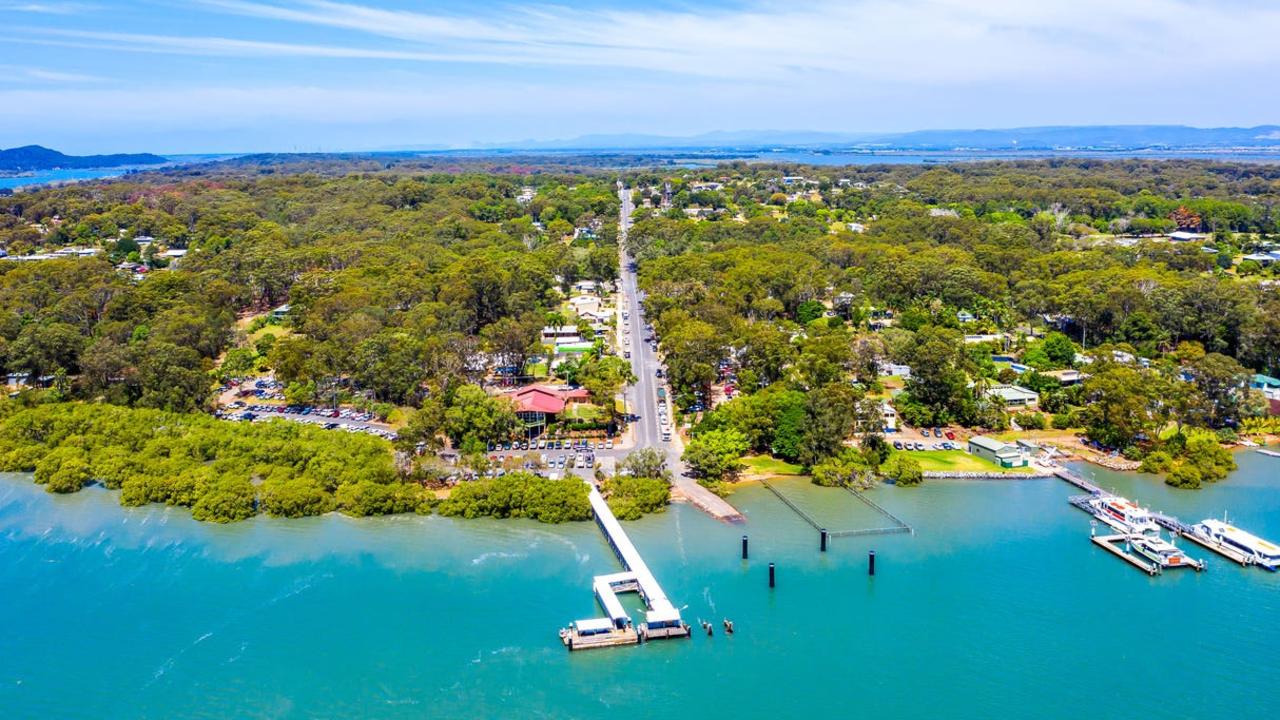
For more than half a century, the Southern Moreton Bay Islands have grown around a problem that has never really been solved.
Since the small lot subdivisions of the early 1970s were transferred to the Redland Shire in 1973, Russell, Macleay, Lamb and Karragarra have developed without a centralised sewerage system connecting them to the mainland. Instead, wastewater has remained largely a matter for individual property owners, individual septic systems and individual household compliance.
For Shane Rendalls, that approach has reached its limits.
“Doing nothing is not a strategy,” Rendalls says. “It is sitting on an environmental and public health time bomb, simply hoping you aren’t the one sitting on it when it finally goes off.”
The issue is becoming harder to ignore as the islands continue to develop. Only around 43 per cent of the approved residential lots have currently been developed, while future development could see thousands more dwellings and a population approaching 20,000 people over the next decade or so.
That raises an uncomfortable question. If the existing wastewater arrangements are already creating problems, what happens when there are substantially more homes, more people and more wastewater?
Rendalls argues that the answer cannot simply be to continue managing the problem property by property.
For decades, wastewater on the islands has generally been treated as a backyard engineering and compliance issue. A household installs a treatment system, maintains it, pumps it out and, provided it meets the relevant requirements, life goes on.
But wastewater does not necessarily respect property boundaries. On the islands’ relatively small residential lots, there can be limited space available for safely dispersing treated wastewater once houses, tanks, driveways, setbacks and other infrastructure are taken into account. When systems fail, absorption areas become saturated, or heavy rainfall overwhelms a system, wastewater can move beyond the property on which it was generated.
That is when an individual wastewater problem can become a neighbourhood problem.
“Neighbouring residents face backyard biosecurity hazards from aging, overloaded uphill septic tanks, generating public health risks and intense civil disputes that Council is currently forced to mediate,” Rendalls says.
The technology itself has changed considerably since the islands were first developed. Early systems were basic arrangements in which toilet waste and greywater were dealt with using relatively crude methods. From the 1980s and 1990s, conventional septic tanks and absorption trenches became widespread. More recently, mechanical home sewage treatment plants and pressure compensating irrigation systems have provided substantially more sophisticated treatment and dispersal.
There are also newer passive systems entering the market that do not require continuous electrical power. But better technology does not necessarily solve a problem when the fundamental constraint is the amount of land available to safely receive the wastewater.
This is where the islands’ small blocks become particularly important. Australian wastewater standards require land application areas to be appropriately sized for the expected wastewater load and the characteristics of the site. On a typical 500 or 600 square metre island block, the available area can become very constrained once everything else that occupies the property is taken into account. The result is a system that can sometimes feel like a constant balancing act: the size of the house, the number of occupants, the treatment technology and the available land all have to work together.
And then there is the weather. Heavy rainfall can saturate soils and overwhelm absorption areas. In a subtropical coastal environment, that creates another pathway by which wastewater and nutrients can move through the landscape.
Rendalls is particularly concerned about what happens when that movement ultimately reaches Moreton Bay. Wastewater contains nutrients including nitrogen and phosphorus. In the wrong circumstances, excessive nutrient loads entering waterways can contribute to algal growth and ecological impacts. The islands sit within a highly sensitive coastal environment, with the Moreton Bay ecosystem supporting important seagrass habitats and marine species including dugongs and green turtles.
The point, Rendalls argues, is not that every onsite system is failing or that every backyard is contaminating the bay. Rather, the risk lies in having thousands of individual systems operating across a growing island population without a coordinated regional wastewater strategy.
“It is not enough to ask whether an individual household system complies with the rules, and we need to ask whether the system as a whole is sustainable as the islands continue to grow,” he says.
There is another dimension to the problem that is less visible to residents but potentially significant for local businesses. Commercial wastewater can trigger a different regulatory regime once volumes exceed the relevant threshold. Rendalls points to the 4,200 litre per day threshold associated with Environmentally Relevant Activity 63, which can bring state environmental regulation and additional approval requirements into play.
For an island business, wastewater is therefore not simply a plumbing problem. It can become an economic development issue. Additional engineering, land requirements, licensing and pumping costs can make commercial development considerably more complicated than it would be in a mainland suburb with access to reticulated sewerage.
That creates a strange contradiction for an area that is expected to continue growing. We want local businesses. We want shops, hospitality, community services and employment opportunities. We want people to be able to build homes and invest in their properties. But the infrastructure underneath that growth matters. You cannot build a sustainable community while pretending that what happens after we flush the toilet is somebody else’s problem.
Rendalls believes the islands need to move beyond the traditional argument about whether sewerage is affordable and begin by establishing exactly what the problem is, what options are available and what the community is prepared to support. Importantly, that does not necessarily mean assuming that one particular sewerage model is the answer.
A mainland style reticulated sewer system across all four islands may be one option. But there may also be alternatives, including localised wastewater systems, targeted infrastructure for commercial precincts, regulatory changes designed specifically for the islands, or other technologies that have not yet been properly assessed in the SMBI context.
The first step, he argues, should therefore be evidence. His proposal is for a community led process that begins with a comprehensive review of what is already known. That would include examining academic and professional research into onsite wastewater treatment, reviewing the performance of different technologies, mapping historical Council plumbing and wastewater records, and understanding the actual experiences of island residents.
Just as importantly, residents would be asked what they want. That includes the uncomfortable question of what people would actually be prepared to pay. A sewerage system is not free. Neither are septic tanks, treatment plants, pump outs, repairs, replacement systems and compliance.
The real comparison is therefore not necessarily “free onsite system versus expensive sewerage”. It is the long term cost of maintaining thousands of individual systems compared with the capital and ongoing costs of some form of shared infrastructure. Businesses would need to have their own conversation about the issue, particularly around development constraints and the additional regulatory burden that wastewater can create.
Rendalls proposes separate forums for residents and businesses so that both perspectives can be properly explored. There is also a proposal for community based environmental monitoring.
Residents with appropriate training could participate in citizen science testing of backyard groundwater bores and monitor what happens during the “first flush” of heavy rainfall, when accumulated material can be washed rapidly through the landscape towards the waterways.
Done properly, that sort of community science is not about manufacturing a predetermined result. It is about building a better picture of what is actually happening on the islands. And that distinction is important.
If the SMBI is going to make a serious case to the State and Federal governments for infrastructure funding, it needs more than frustration. It needs evidence. It needs data on population growth, wastewater volumes, system performance, environmental conditions, regulatory barriers, community preferences and the costs of the available options.
Rendalls says his professional networks through the Onsite Wastewater Treatment Association and local government forums can help connect the community with researchers, engineers, regulators and wastewater specialists.
“Government departments cannot dismiss this campaign as mere community sentiment,” he says. “It is a scientifically rigorous initiative guided by industry experts.”
That is an ambitious claim, but it also points to what may be the most important shift in the debate. The islands have spent decades dealing with wastewater one property at a time and perhaps the time has come to start dealing with it as a community.
The argument is not simply about toilets, septic tanks or sewer pipes. It is about what sort of community the Southern Moreton Bay Islands want to become as they grow.
Infrastructure is rarely exciting until it fails. Sewerage is perhaps the ultimate example. Nobody thinks about it when it works, but when it doesn’t, the consequences are immediate, expensive and sometimes impossible to contain within the boundaries of a single property.
The islands have an opportunity to get ahead of that problem rather than waiting for a crisis to force the issue. As Rendalls puts it, “The luxury of waiting is gone.” If you live or operate a business on the SMBI and want to be involved in developing a community led wastewater strategy, get in touch with Shane Rendalls to register your interest and find out how you can contribute. To get involved, contact shane.rendalls@redland.qld.gov.au.