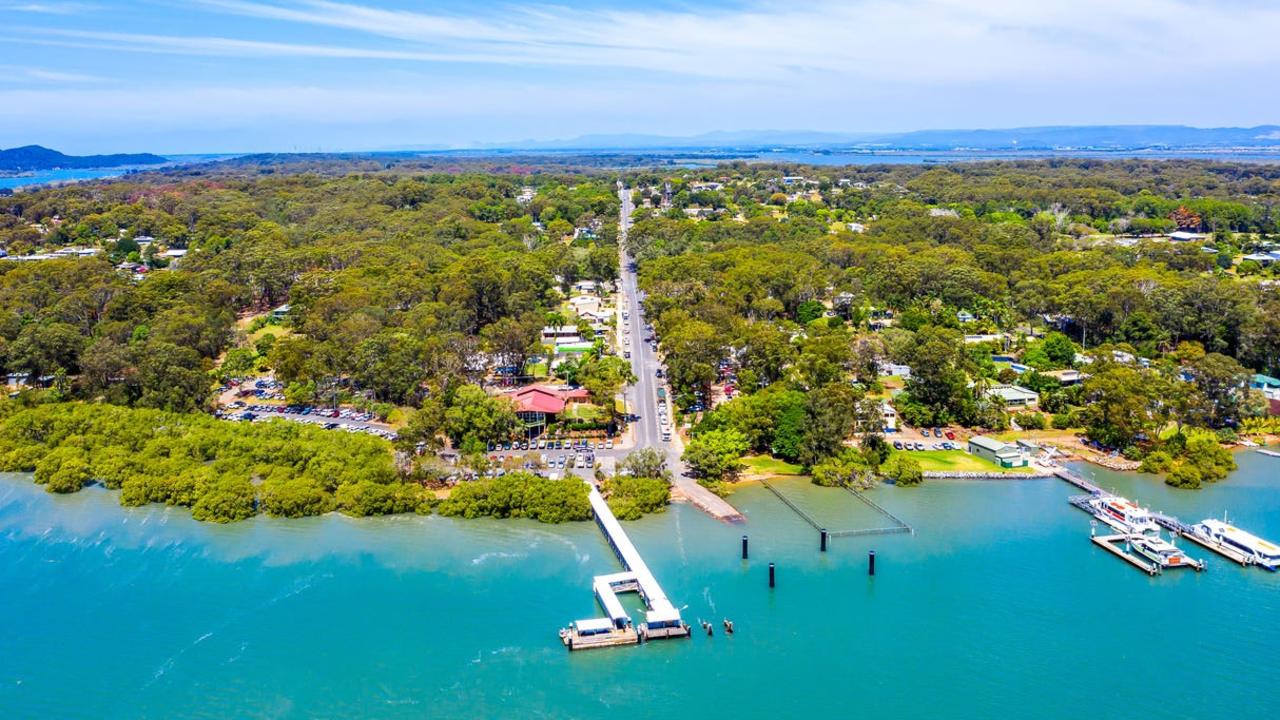
Before notifications, group chats and the daily deluge of information across social media, there was Doug Morton’s gong.
On Coochiemudlo Island, the sound meant the mail was sorted and ready for collection from the little store and tearoom his wife, Mary, ran beneath their house. A simple signal, perhaps, but one that says a great deal about a time when the arrival of a letter could be an event and the local store was more than somewhere to buy what you needed.
It is exactly the sort of detail that interests Coochiemudlo Island resident and author, Christine Leonard. Not necessarily the big historical milestones, but the small, human moments that reveal how people lived, what mattered to them and how a place became what it is today.
“Everyone has a story but to understand how it plays out in the context of time and place fascinates me, especially during times of great change, drama and upheaval,” Christine says.
Her book, Coochiemudlo: A Mariner’s Mystery, explores the life of Edward Field Jones, known as Ted, and the history behind the island’s annual Flinders Day celebrations. In telling Ted’s story, Christine also reveals something of the community around him, its characters, its changes and the people who helped shape the island’s identity.
Christine’s own story on Coochiemudlo began in 2010. At the time, she was living in Brisbane with her family and working in international development, travelling frequently to Papua New Guinea. Born in PNG and raised on islands, she felt an immediate connection when she visited an ex-PNG friend on Coochiemudlo with her mother.
Because of its location, Christine and her husband bought a house, intending to keep it as a beach house until retirement allowed them to move across permanently. It was a practical decision rather than a grand declaration of a new way of life. But the island made an impression, and the ensuing years have brought a deeper appreciation of what makes it special.
“I love the feeling of being closely surrounded by nature, watching the sea change with the weather and observing the sea eagles soaring above every day,” Christine says.
Having watched Coochiemudlo’s population growth, particularly since Covid, Christine has observed the island’s character evolve. The balancing act between development, community needs and the natural environment is becoming increasingly important. For long-term residents, change can bring welcome improvements while prompting questions about what might be lost.
Christine appreciates that progress has never been a straightforward story of improvement. During the 1960s and 1970s, Coochiemudlo underwent significant transformation. Farms were subdivided, street names introduced and services gradually expanded. The island came under Redland Shire Council in 1962, bringing rates, services and more regulation. Electricity and town water changed daily life, with sewerage following in the 1980s.
Before those conveniences, generators roared in the evenings, roads were unsealed, there were no streetlights, and the town dump and fire brigade depended on volunteers. Residents enjoyed a level of independence, but they also had to make things work with what they had.
The arrival of new services brought benefits, but it also changed the relationship between residents and the island they called home. More infrastructure meant more rules, while greater convenience came at the cost of some of the autonomy people took for granted.
For Christine, these changes are interesting not simply as a timeline of development, but because of what they reveal about people. How did they respond? What did they welcome? What did they resist? And what did everyday life look like while all this was happening? The answers are often found in the details.
Christine’s interest in social history began long before Coochiemudlo. Her writing has explored family history, convicts and Bougainville, and she continues to research new projects. She credits her mother’s family of storytellers with helping foster her fascination with the past.
Research, however, has a habit of taking unexpected turns. While recently examining old records at the Proserpine Museum, Christine came across letters her mother and aunts had written to the museum decades earlier. As newsletter subscribers, they helped record their family’s pioneer history in the Whitsundays. In researching other people’s lives, Christine had unexpectedly uncovered another piece of her own family’s story.
It is a reminder that the past is not always as distant as we imagine. It can be sitting in an archive, tucked into a box of letters or preserved in the recollections of someone who remembers how things used to be. The challenge is recognising its significance before it disappears.
Writing about living communities also requires sensitivity. Christine wanted Ted’s story to celebrate his life and the community, not diminish anyone who had been part of it. Some people were reluctant to contribute because they felt their memories were unreliable, and she respected that. Other stories required careful thought and conversations with people who remembered the events.
“I never intended to write anything that would make someone feel less of themselves, even if they have since passed on,” she explains.
The intention was to celebrate, not to settle old scores. Flinders Day, which the island has held since 1981, provided a fitting thread through the story: a celebration sustained by people willing to contribute to something larger than themselves.
Christine believes small communities offer valuable opportunities to participate, make a difference and have their voice heard. But she also recognises that living together requires effort.
“Like living in any small community, life is what you make it,” she says.
“Contributing and joining community group endeavours is a great way to stay engaged and feel like you are doing something worthwhile.”
It is a straightforward philosophy, but one that sits comfortably alongside the history she has documented. Communities are shaped not just by what happens to them, but by what their people choose to do.
Ask Christine what she would most like to revisit from Coochiemudlo’s past, and she returns to that earlier landscape, before the farms were subdivided, when Doug Morton rang his gong and people made their way to collect the mail. It is not a grand historical spectacle. There are no famous names or sweeping events. Just an ordinary moment that, once recorded, becomes a window into an entire way of life.
Christine still lives on Coochiemudlo. She has watched the island change and continues to appreciate its natural beauty, from the shifting sea to the sea eagles overhead. She also knows there are many more stories waiting to be discovered in the Coochiemudlo Island Heritage Society archives. Somewhere among those records may be another small store, another unlikely character, or another forgotten detail that unexpectedly brings the past to life.
For Christine Leonard, that is the appeal of history: exploring how ordinary people lived through extraordinary change, and how their experiences helped shape the places we know today.
The gong may have fallen silent, but the stories remain. They just need someone willing to uncover them, record them and pass them on.
To discover more of Christine’s books and stories, or to get in touch, visit www.leonardstories.com