It started with a YouTube video and a curiosity that would eventually lead a former police officer to a very different kind of second career.
In 2009, David Hogan heard the sound of a Native American style flute on YouTube and was hooked. Not on the idea of becoming a musician, not on any romantic notion of claiming a culture that wasn’t his. He simply loved the sound.
So he bought a manual from a flute maker in the United States and taught himself how to make them.
David is particularly conscious of the cultural origins of the instrument. He makes no claim to Native American heritage or connection, and believes the line is crossed when people manufacture these instruments while pretending to have a cultural relationship they don’t have.
For around three years, he made flutes, then life changed and his workshop was packed away into a shipping container. For the next 12 years, the tools stayed there. The flutes didn’t, David kept a number of them and continued to play.
By then, music had begun to take on a significance that had little to do with performance. David had spent 21 years in the police service, including 14 years as a police officer in Eagleby and time as an acting sergeant on Russell Island. After years of seeing some of the harder sides of life, he discovered that sitting down with a flute could take him somewhere quieter.
“It’s a way to find calm and grounding and put me in a better place for the bad and difficult things I’ve seen,” David explained.
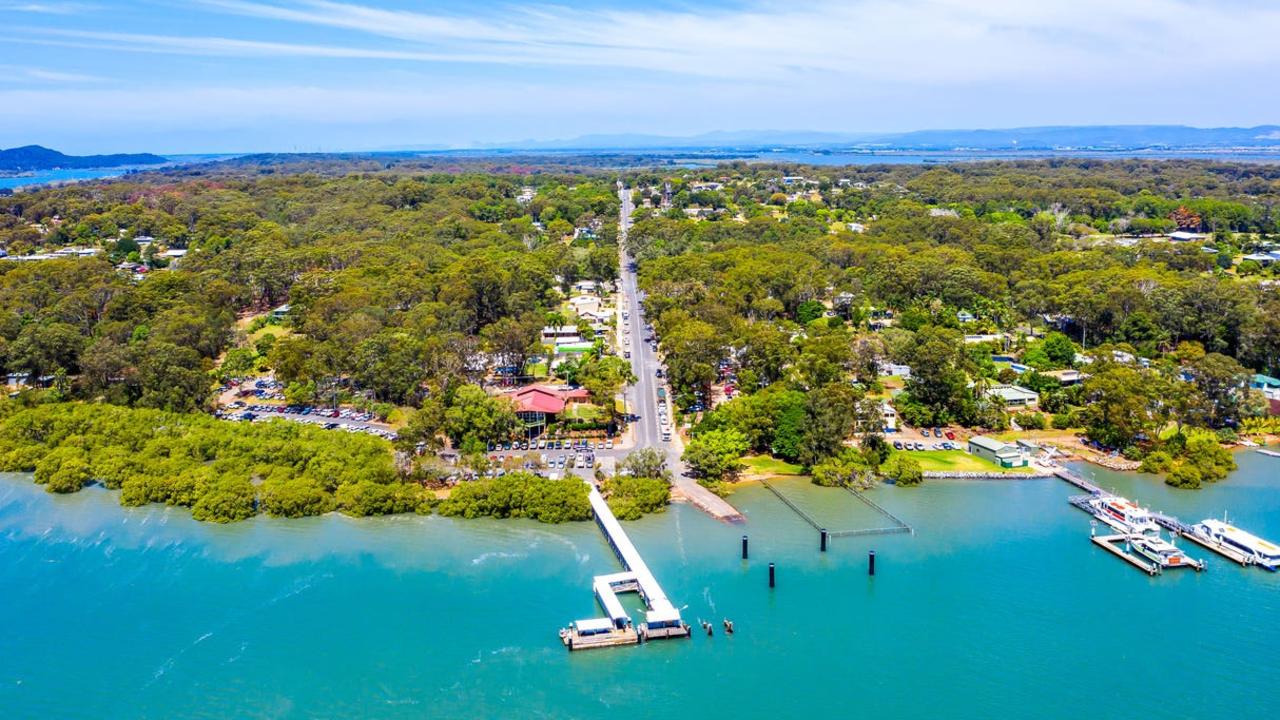
In 2017, David moved to Russell Island. The peace, the semi-rural atmosphere and the feeling of being close enough to the mainland without being swallowed up by it suited him.
After retiring from the police at 60, the flutes came back out. Today, they occupy his time in a very different kind of workshop.
At first glance, the instruments look almost deceptively simple; essentially a single piece of timber with a handful of holes. Musically, they are deliberately limited. A pentatonic scale uses just five notes, while David’s six hole design allows players to access Western pitches.
For a trained musician, that simplicity might be a restriction. For everyone else, David believes it is the secret.
“It’s musically very, very limited,” he says. “But the enabling of people to quickly be able to play music, you can’t beat it.”
Unlike the guitar, which can require years of practice before a beginner feels genuinely competent, David says the flute gives people an immediate way into making their own music.
“In a few hours of learning, you can make your own music and it’s your music.”
And perhaps that is where the real appeal lies, as you don’t have to be a musician and you don’t have to know much about music. You breathe, cover a few holes and something magical comes out.
The longer the flute, the deeper the pitch. David says those deeper tones can be particularly effective at helping people reach a meditative state.
“Most people struggle to get into a deep meditative state,” he says. “It’s not complicated and directly connected to your breathing.”
There is plenty of craftsmanship behind that apparent simplicity. David works predominantly with Australian timbers, including Mackay cedar, black wattle, Tasmanian blackwood, swamp mahogany, red cedar and spotted gum.
The journey from tree to flute is a long one. A stump is cut into a blank, turned into a cylinder and drilled before returning to the lathe for shaping. Then comes the intricate work of creating the nest and windway. The hardest part, David says, is cutting the true sound hole.
A mid range flute can take around 20 hours to make and prices generally range from $300 to $400, although there are some remarkable exceptions. David has a flute made from ancient New Zealand kauri, the timber around 4,000 years old, valued at $1,040.
But perhaps the most fitting flute in his collection began with one of those strange island coincidences that seem too unlikely to be coincidence at all. David was searching Marketplace for timber when he came across a man advertising logs from his timber mill. There was just one surprise. The timber mill owner lived on Russell Island. The tree had been cut down years earlier, and David saw the potential in the swamp mahogany. He made a flute from the timber and eventually exchanged his first logs for a flute. It seemed somehow inevitable that this would become the flute I would buy.
I’m learning to play it, slowly, and discovering that there is something satisfying about making music without needing to become a musician first. There is no grand performance involved, just five notes, a breath and a piece of Australian timber.
For David, the flutes have become more than a craft; they are a way of sharing the simple pleasure of making music and finding a little quiet along the way.
If you’re curious to hear more, see David’s handcrafted flutes and discover the story behind his work at www.canaipaflutes.com.au.