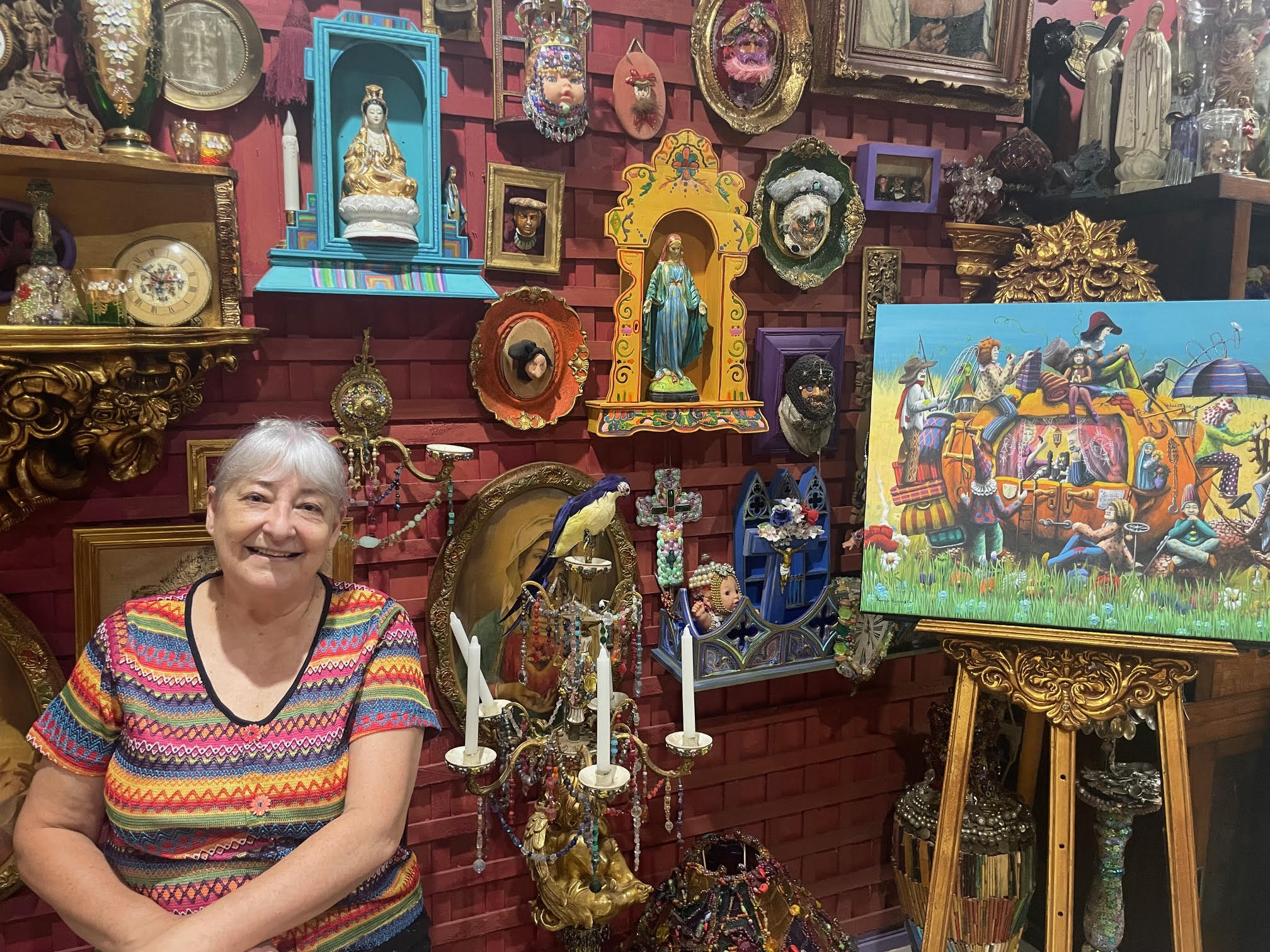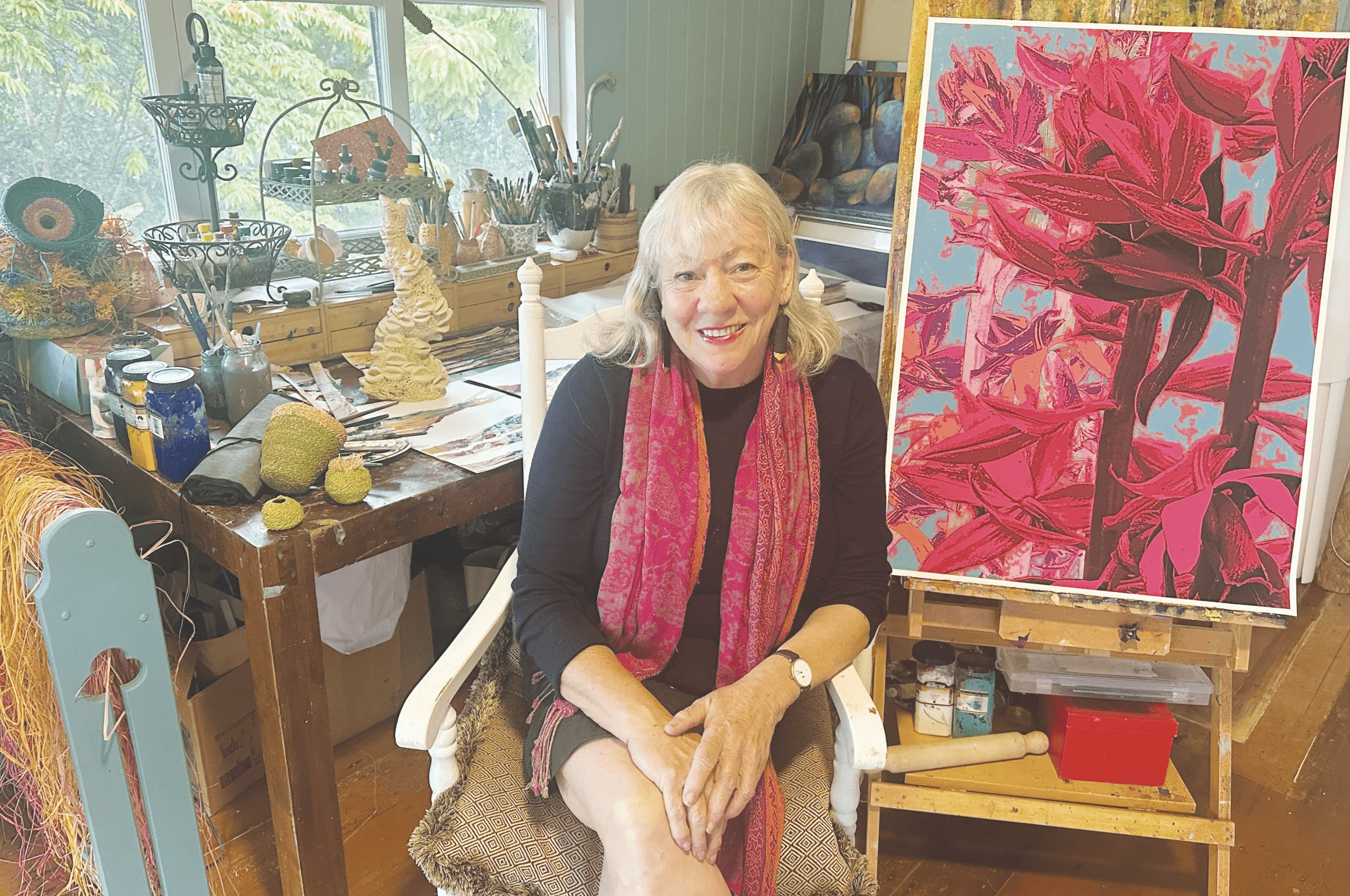
Sandy Ward spent most of her working life in a room where creativity had to fit between bells.
Teaching art meant managing chaos, shaping it, sometimes trying to contain it. Cardboard cities, collaborative art games, student built worlds that occasionally made her wish she could step inside them instead of supervising from the edges.
Retirement stretched her life out in a different way. No terms, no timetables, no institutional rhythm dividing time into neat blocks. It took longer than expected to step out of that structure.
“I didn’t realise how regimented everything had been,” she says. “It takes a while to unlearn that.”
During her teaching years, more than three decades were spent at a single school in Warragul. A rare kind of continuity, where generations of students moved through her classroom while she stayed put, observing not just their art but their attention, their distractions, and what sat underneath them. She recognised it because she had been there herself.
“I was often distracted as a student and it shaped my teaching,” Sandy says. “Less about control, more about connection.”
That approach showed up in the way she built classrooms, with open ended projects where outcomes were never fully fixed. When whiteboards arrived one year, she and her students ignored them and built cardboard houses instead. Rooms became homes. Homes became streets. Streets became small worlds with fences, clotheslines, letterboxes, and one cardboard bird perched above it all. Even later, in pastoral roles and year level coordination, Sandy worked the same way; interested in what sat underneath behaviour rather than the behaviour itself.
There was a boy in her home group who barely spoke all year. She greeted him every morning, used his name, asked how he was going. Months later, he finally asked how she was.
“I was rapt,” she says. “Then he told me he didn’t really care, but thought he should be polite.”
She still calls it progress.
Outside the classroom, she was involved in union work, equal opportunity advocacy, Amnesty International, and student representation. To students, it created a slightly mythologised version of her; more radical, more outspoken than she felt she was. “It gave me something to aspire to,” she says.
Teaching became the centre of everything until it eventually ended, after a lifetime shaped by school systems, family ties to education, and long term stability in one place.
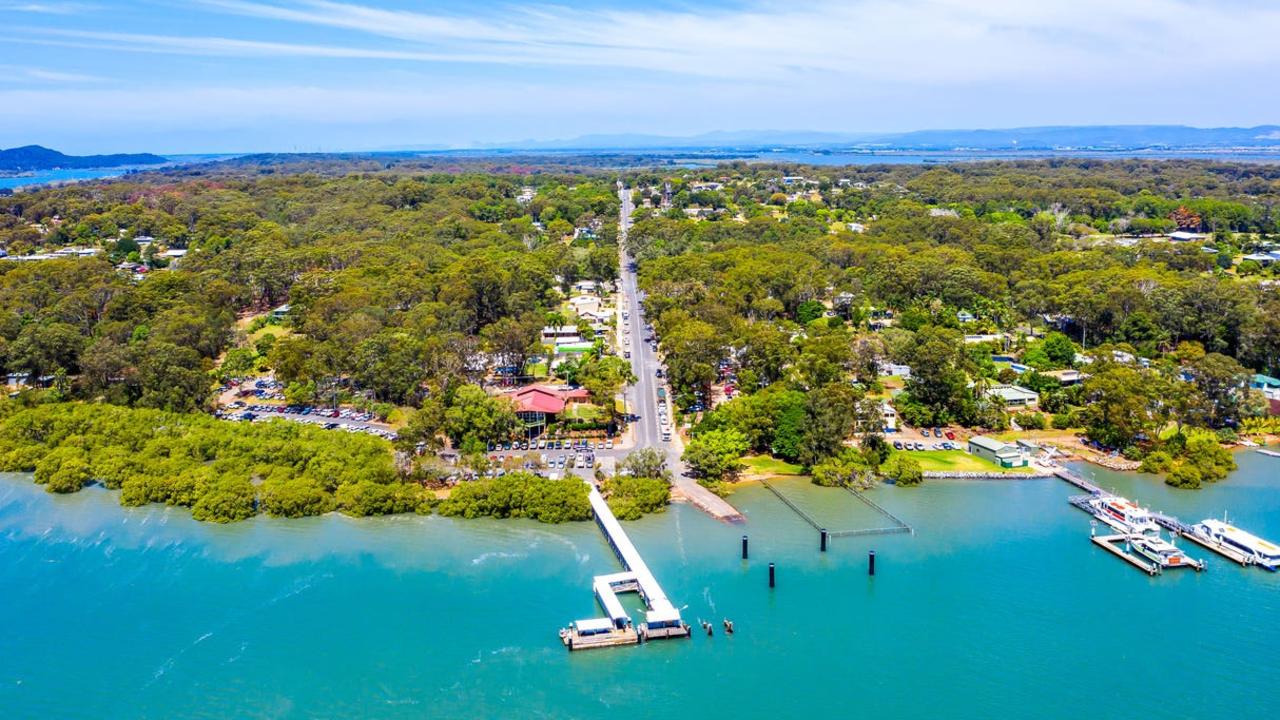
The move to Russell Island came later, suggested by her son. What began as a casual idea quickly became a decision made before all the details were fully worked out.
“I didn’t know anything about the islands,” she says. “I didn’t even know they existed.”
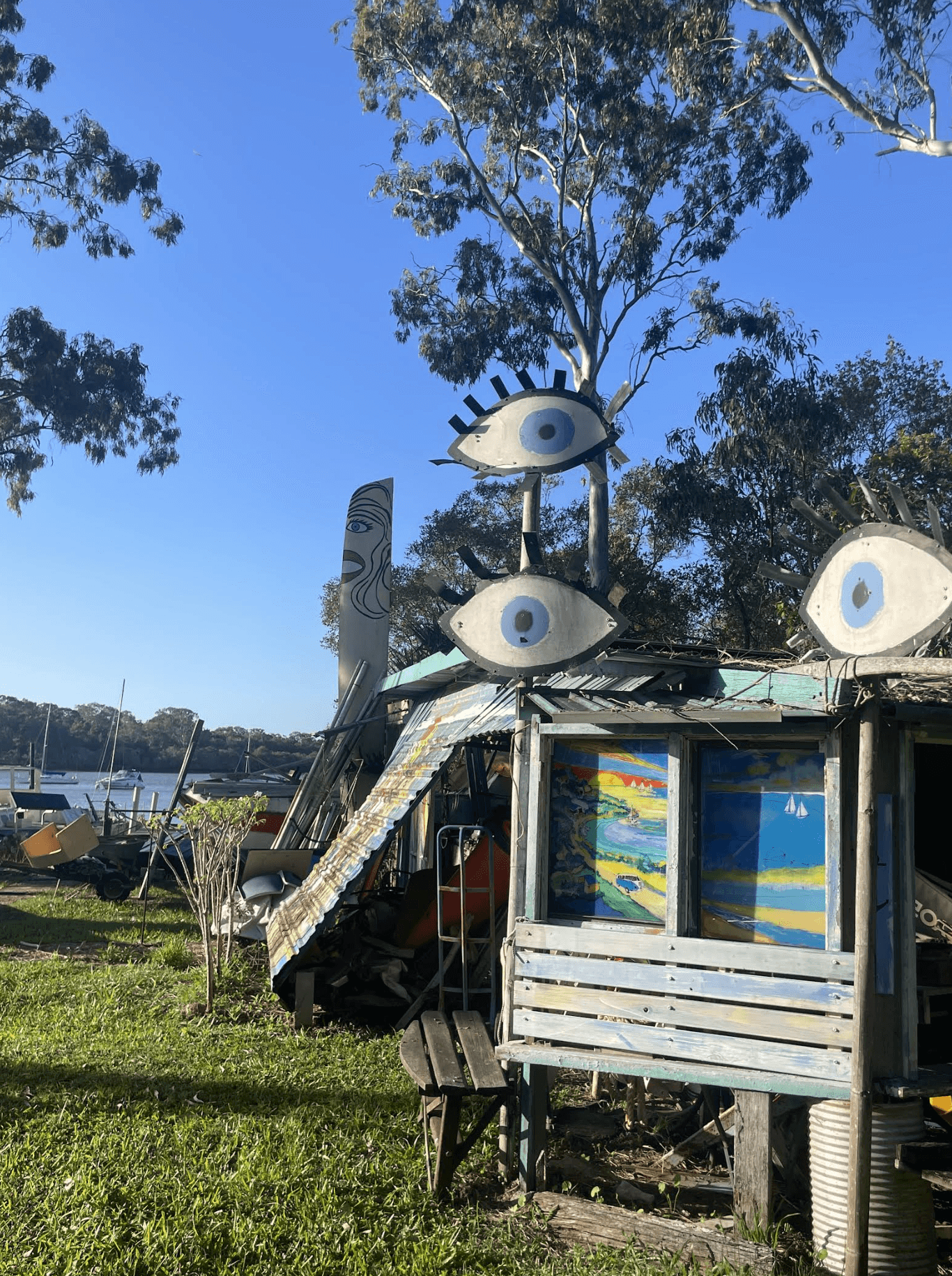
What she found was not isolation, but connection. Through introductions and chance meetings, she was quickly drawn into a network of local artists and informal creative groups.
From that, Canaipa Connections formed; a collective built on shared retreats, making work together, and exhibiting as a group. What began as an informal trip to Stradbroke Island became a regular rhythm of creative time away.
“We just thought, why not go somewhere, make work, and see what happens,” she says.
Those gatherings grew into exhibitions, including regular shows at RicArts, and projects involving artists from surrounding communities.
One installation sent 80 cardboard cores from carpet rolls to Townsville, each developed by different artists responding to environmental themes such as reef bleaching and cane burning. It became a shared statement built from many voices.
That collaborative mindset continues in her current practice. She is now making sculptural insect hotels and environmental works focused on south-east Queensland birdlife, alongside a submission for the Paddington Art Prize.
“I’ve always been interested in the environment,” she says. “Now I’m thinking more about what we can actually do with it.”
Her daughter Sarsha notices the same pattern running through her mother’s work.
“Listening to mum talk about her art and her teaching is really funny,” she says. “She’s always collaborated in her teaching, in group work, and now even in her own practice. She’s making insect hotels….art for the insects to collaborate in.”
It’s said jovially, but it lands neatly on something truer underneath; that Sandy Ward has never really worked alone, even when she appears to be. The classrooms, the collectives, the gardens, the birds and insects she now builds for, they all form part of the same impulse. Not to stand outside the work. But to step into it, with whoever or whatever is already there.