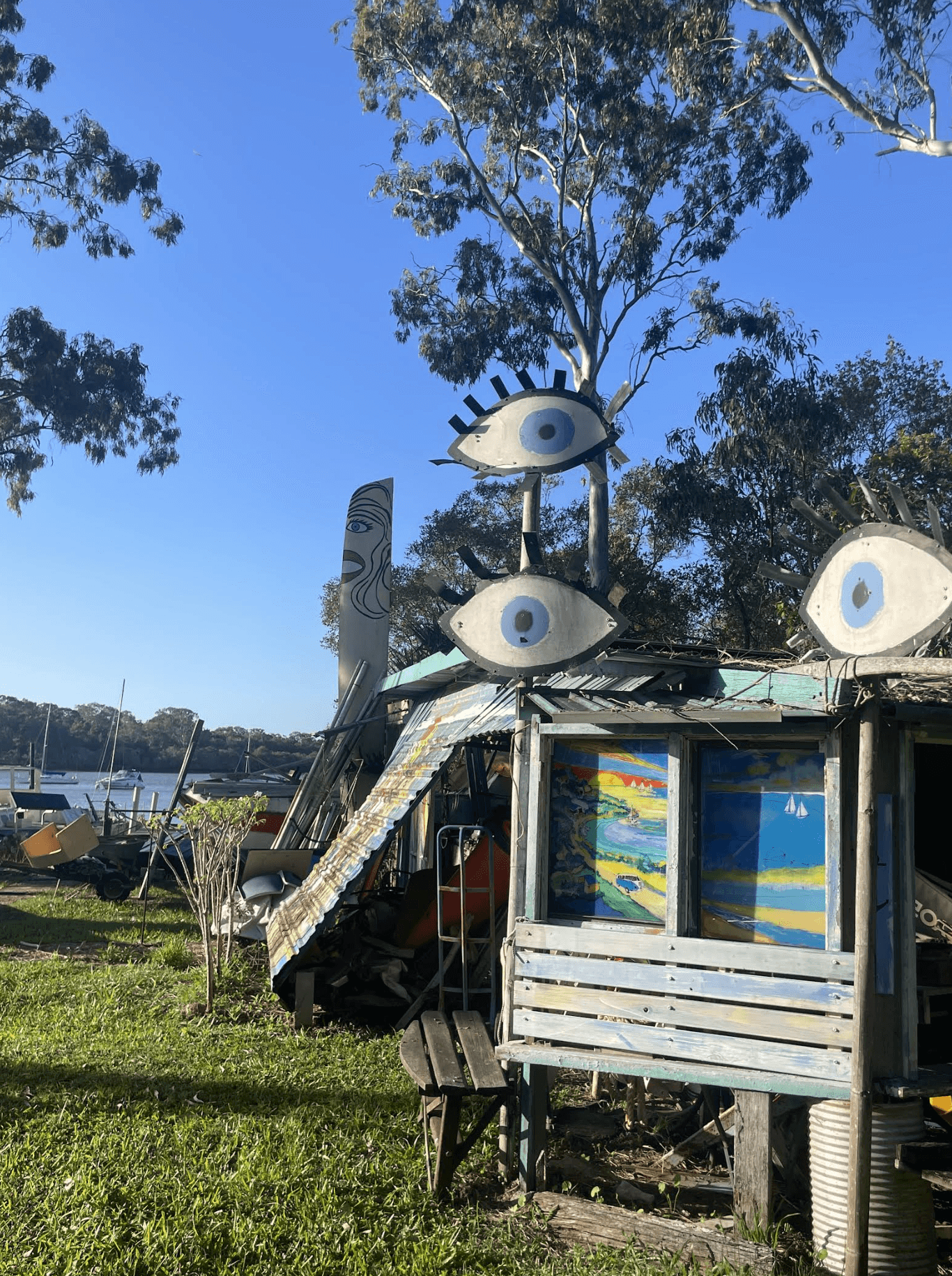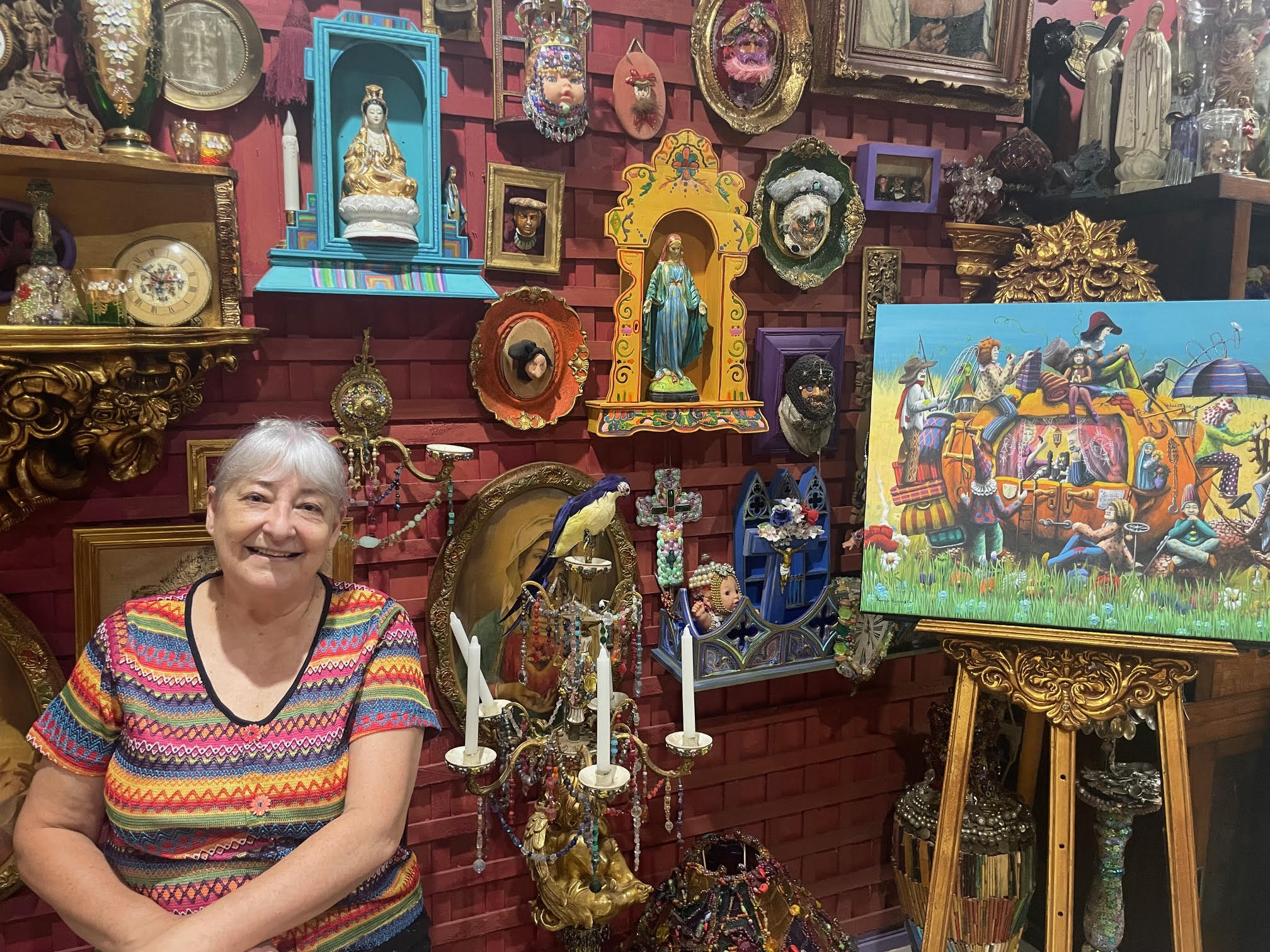
Paintings lean into photographs. Family history sits beside found objects. Antiques, bric-a-brac, bones, birds, birdcages, skulls, mosaics, glass, colour layered on colour. Jewelled kitchen cupboard doors catch the light, throwing small flashes of colour across the kitchen. Lamps are bejewelled. Ceilings are decorated so richly you feel as if you’re floating rather than standing. Mosaics appear where plainness once lived. Colourful carpets and rugs are layered over tiles she couldn’t replace. Ceramic ducks and fruit became cupboard handles. Nothing matches, yet everything belongs. The home doesn’t just hold art, it is the art.
You could easily mistake it for a private museum and you could also easily misunderstand the woman who lives there. At first glance, the space suggests someone eccentric, maximalist, possibly loud. Someone desperate to be seen, to be noticed, to sit at the centre of attention. But on meeting Kinga, you realise immediately that the opposite is true.
The excess is not ego, it’s expression. She is quiet, humble and charismatic in a way that sneaks up on you. There is something almost gypsy like about her, not performative or styled, but natural. A warmth that fills the room long before she speaks. She welcomes you in as though you’ve always belonged there.
Kinga is sixty-five and has lived on Russell Island for eight years. Before that came many other lives; growing up in Poland, studying art, being selected in her twenties as one of ten young Polish artists sponsored by the Prince Charles Trust and flown to the UK to meet the man who is now King. She trained as an engineer in animal husbandry, migrated to Australia in 1993 as a single mother, married, settled on a farm in Langwarrin, and survived a serious road accident that changed her body and her future.
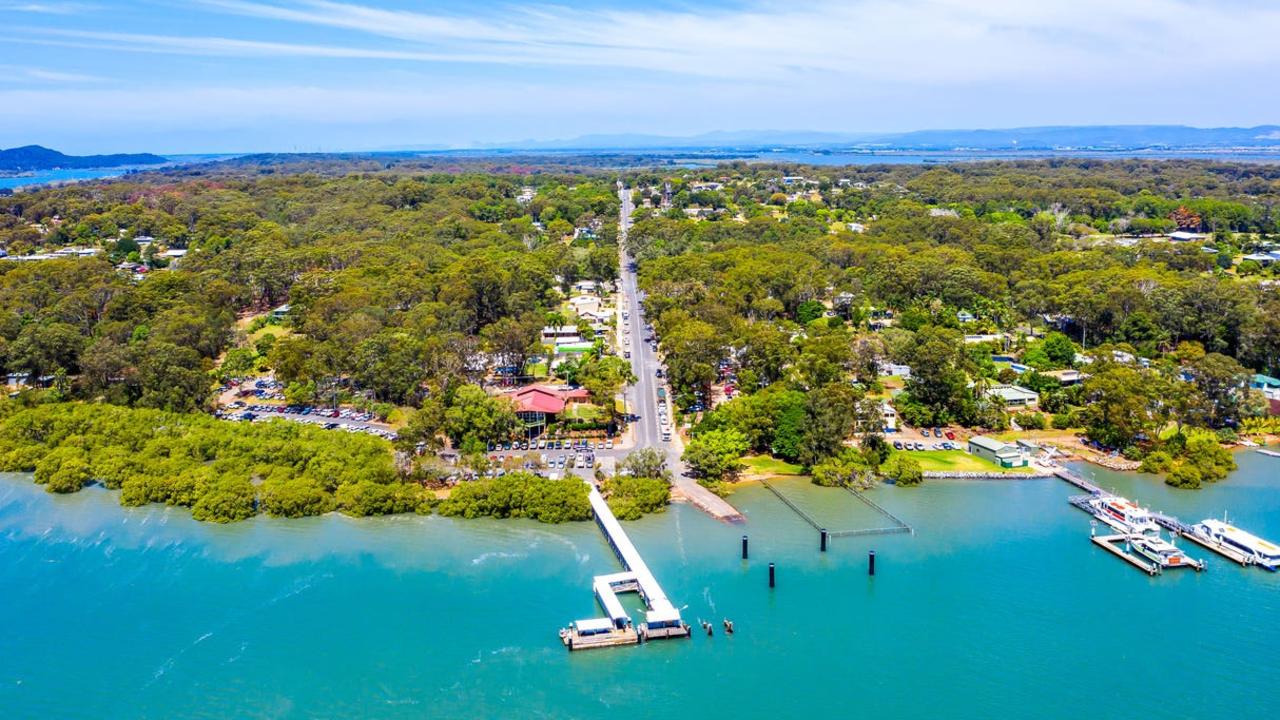
When Victoria became too expensive and the climate increasingly unforgiving, she chose something else; not a compromise, but a reset. She googled the cheapest property in Australia and found Russell Island. On the final day of a holiday with her daughter, she caught the barge across, looked out through the portholes at the water and the islands, and fell in love. She bought the house on the first day.
Inside was white. White walls. White rooms. White silence. Kinga doesn’t like white, it erases too much. What followed was years of building, not just a home but an inner landscape made visible. She doesn’t design. She responds. If something feels wrong, she changes it. If it catches her eye, it stays.
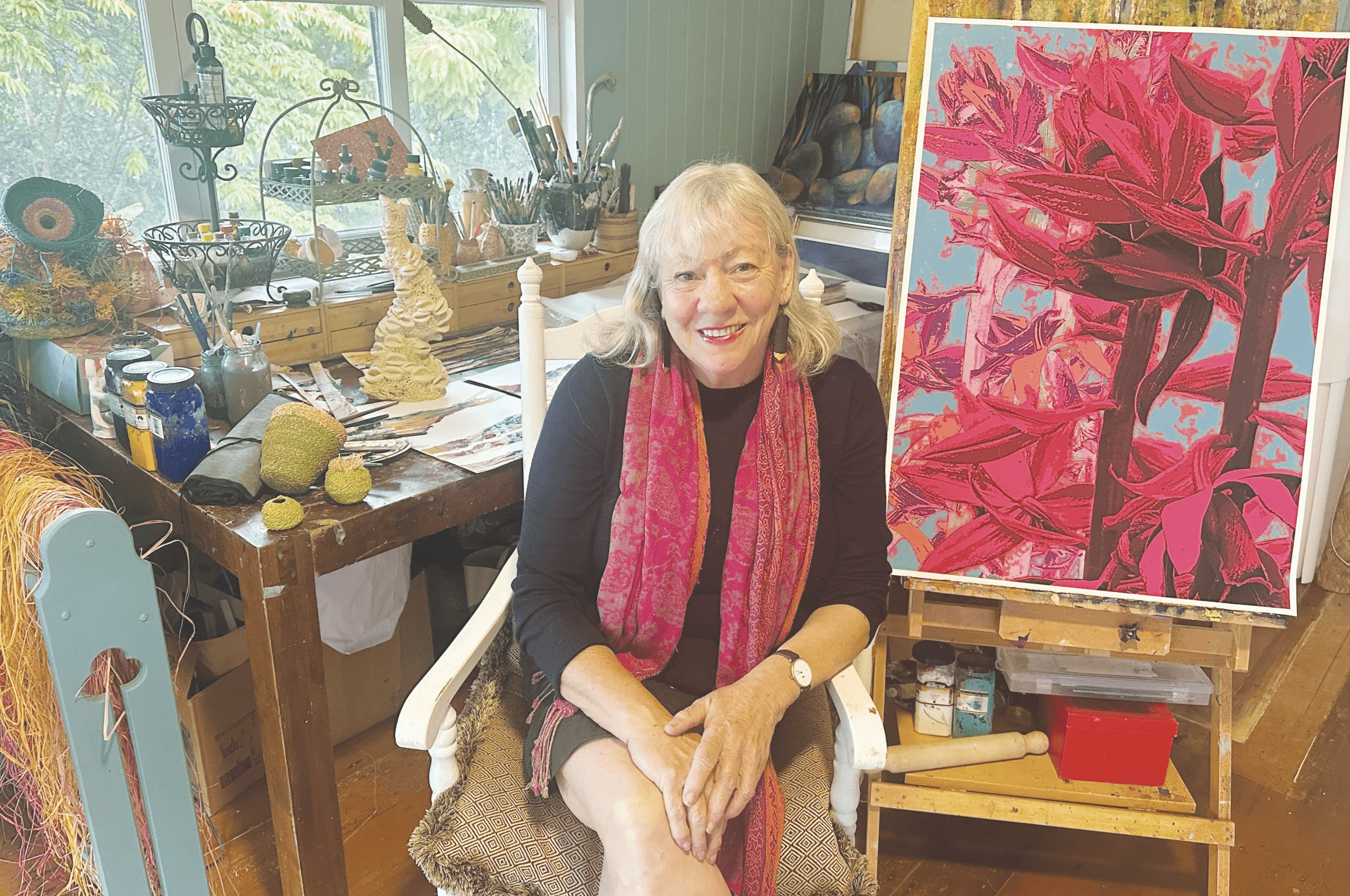
Kinga is a surrealist painter, a master of tapestry, and an artist who also paints on glass. She sketches sometimes, keeps hundreds of photographs as reference, but mostly lets the work lead. She has little patience for art that needs explaining.
Collaboration holds little appeal as it usually means compromise. The rare exception is family; her daughter Aga, a tattoo artist, who occasionally translates Kinga’s paintings onto skin. Canvas becomes body. Story becomes permanence. Even then, it’s not strategy, just continuity.
She doesn’t talk about rules because she doesn’t really see them. She doesn’t measure herself against other artists, movements, or markets. She runs her own life and always has. Painting has threaded through everything. Art was never a career plan, just a constant companion.
“I don’t push boundaries to be known,” she says. “I’m very happy I can make my art and show it to people who appreciate it.”
What surprises her most isn’t praise or success, but something simpler - seeing her paintings living inside other people’s homes. Hung on walls. Part of daily life.
“People smile when they look at them, and that’s enough,” she says.
Her work isn’t philosophical by design. It’s humorous, surreal and alive. That’s the legacy she values most - art that gives happiness without asking to be explained.
Inspiration comes from everywhere and nowhere specific. From Bruegel and Bosch, from religious paintings and surrealism, but also from a small green spider that lives at her house. It jumps onto her when she sits. She talks to it. It looks back.
“It has its own personality,” she says, matter-of-factly.
“That’s why I paint animals doing very human things; because everything, to me, has a soul worth noticing.”
Her process would confuse anyone looking for strategy. She paints for herself first. Always. The house is layered because she likes it that way. The paintings exist because she wants to tell herself stories. If others connect with them, that’s a gift, not the point. Some works sit unfinished for years, waiting. Others arrive quickly.
“My brain is on a different vibration when I paint,” she explains.
“It’s the same feeling anyone gets when a problem won’t let go.”
These days, life is simple. Long hours painting. Gardening until lunchtime. Multiple projects always running. Wine in the afternoon while feeding the ibis she calls by name. Quiet routines. A small circle. A rich interior life.
This year looks much like the last, and very much like the next. Kinga will submit work to the same three exhibitions she always does - Mornington, Camberwell, and the Luxembourg Art shows. She has no grand plans beyond that, no appetite for reinvention. A future solo exhibition sits somewhere ahead, unforced and unhurried, when the time feels right.
Kinga paints because she always has. Because something inside her asks for colour, and silence, and time. What she has built - the house, the work, the life - isn’t a statement. It’s a state of being.
And perhaps that’s the quiet truth running through everything she makes; that a life doesn’t need to be explained, optimised, or performed to be complete.