“Did you go to a funeral at Tallebudgera a few years back, for Damien?”
“Yeah,” he says, without a second thought.
It lands differently than expected. Not dramatic, or emotional. Just matter of fact.
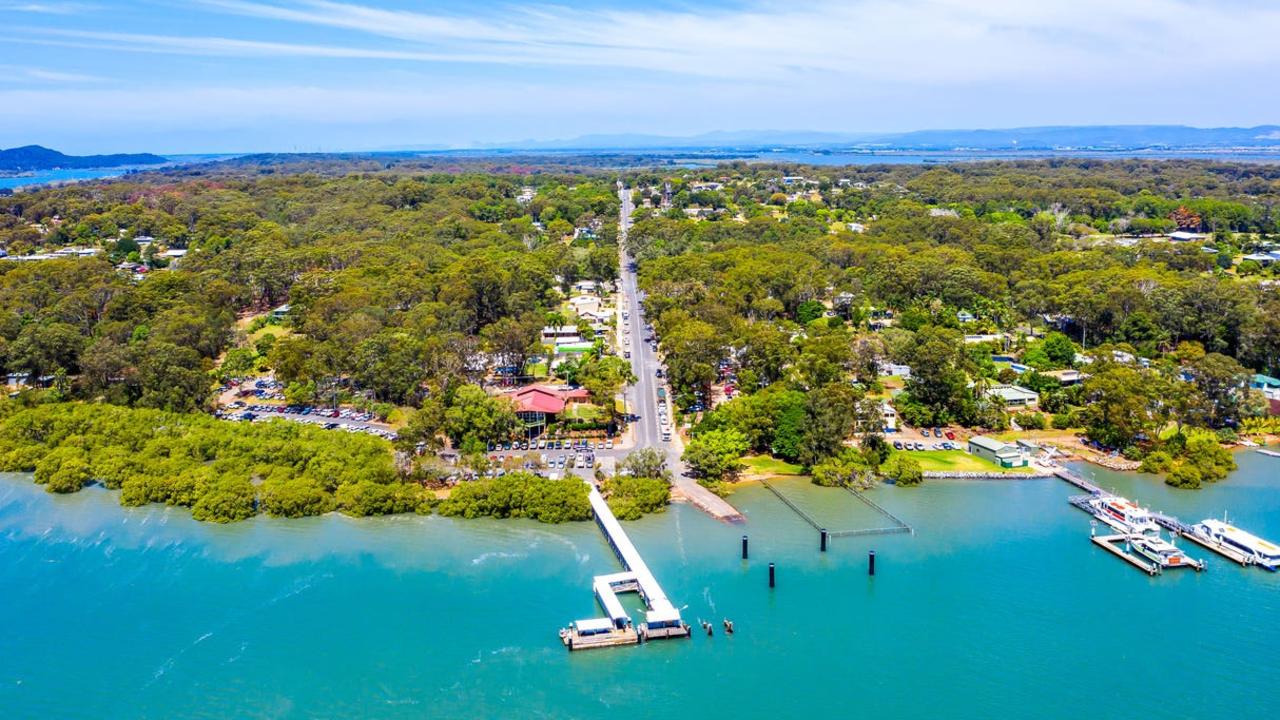
I’ve been here before with him. Years ago, though neither of us placed it at first when he greeted me at his door, we spoke about his artwork and the way he builds from scrap metal, and about the islands. Macleay Island in particular, like it wasn’t just a place on a map but something closer to relief. A decision already made somewhere else in time.
Now I’m sitting across from him on that same island, and it turns out he meant it.
“My friends showed me around some years ago and I just knew it was where I wanted to live,” he says.
No deliberation or spreadsheet of pros and cons. Just recognition. The kind of certainty most people spend years trying to negotiate their way into.
What he left behind wasn’t much, at least not in the way people usually tell moving stories. There’s no dramatic severing ties or relationships. No grand reinvention.
Before all of this; before sculptures, before installations at the Macleay Island Arts Complex, before strangers stopped him to ask what something means; Marc worked as a boilermaker and fitter and turner. Metal had rules then, and it had purpose. Things were made to function, not to be interpreted.
“I’ve always done everything to the best of my ability, and even back then my boss used to all my work art,” he says, proudly.
The shift from trade to art didn’t happen in a studio or with anygrand artistic awakening. It happened in a scrap yard.
Marc doesn’t talk about things as if they’re becoming something. He talks about them as if they already are. Scrap isn’t scrap. Metal isn’t finished. An island isn’t escape. It’s recognition.
“I used to put weird and strange things aside, things other people had already decided were finished,” he says.
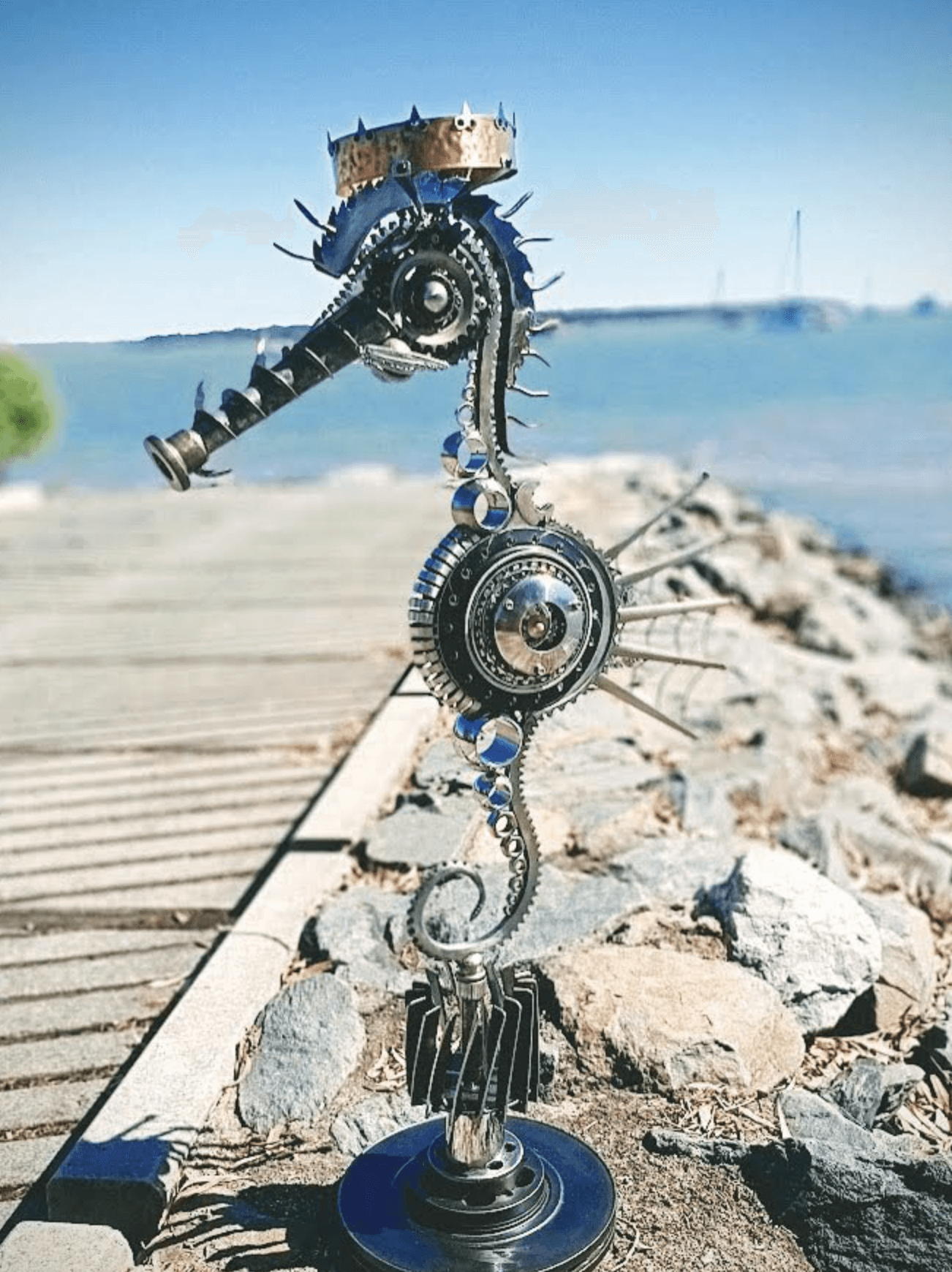
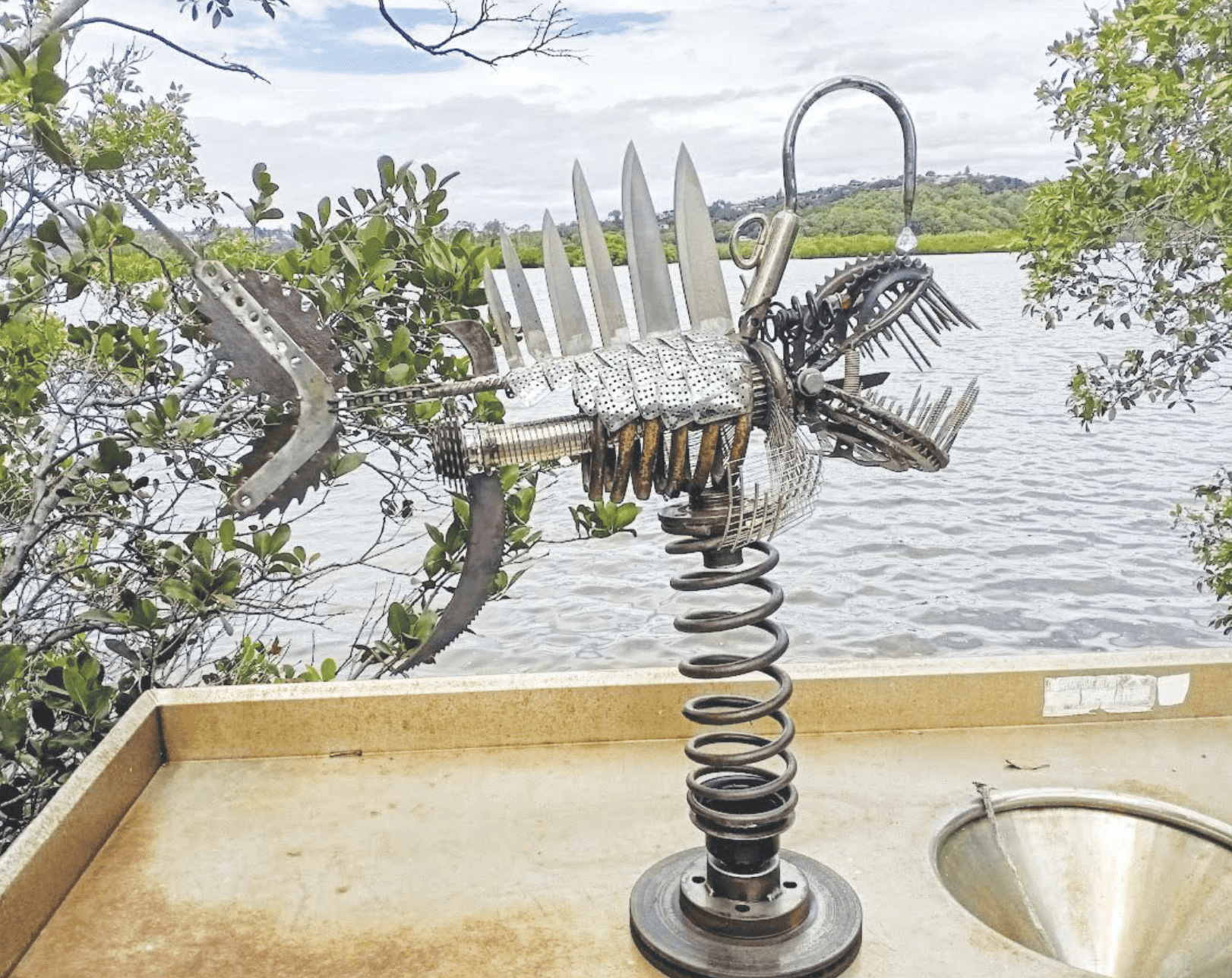
To Marc, a compressor cylinder becomes a body, a piston becomes a skull, a pile of discarded spanners becomes “The New Wave,” his large installation at the entrance to the Macleay Island Arts Complex, made from more than 200 spanners and over 150 hours of work.
He didn’t build it so much as adjust, place and wait until it felt right; a patient process, and a stubborn refusal to accept something is finished before it’s proven otherwise. It’s the first time his work has lived in public space. Before that, it lived in sheds, yards, homes of friends and family. Now people stand in front of it, circling it, trying to work out what they’re looking at.
He doesn’t call himself an artist. “I’m an artisan,” he corrects, firmly enough that it’s not really up for debate.
Someone who has perfected a craft. Someone who builds things properly. One offs. No shortcuts. No replicas.
Not everything he makes is for sale. His robots, for example, are not going anywhere.
“They’re for my kids,” he says. Simple, and final.
Then, the conversation takes a turn with a new subject.
“Melba’s my therapy dog, my little shadow, she’s always nearby, moving quietly through the rhythm of my days,” he says with warmth.
On the island, word travels quickly. Neighbours become collaborators, conversations become commissions. A man named Clint Hoffman sees his work and starts asking for pieces. Others follow.
There’s talk of larger projects too; something special across from the pub, something floated through local groups. Marc is already thinking in shape, even if the paperwork hasn’t caught up yet.
He talks about other artists on the island with no sense of competition.
“There’s a lot of talent and creative energy here, and I’m blessed to be embraced by many of them,” he says.
“I’m also grateful for the support from the Macleay Island community, their kindness and generosity have meant a lot,” he says.
When I ask what he’d do if all his sculptures disappeared overnight, he grins.
“I’d make a broadsword and a double sided axe and go find the people responsible.” A beat. “Only joking.” Mostly.
Before I leave, I think again about that interruption at the start. The funeral. Tallebudgera. Damien. The way the past folded itself unexpectedly into the present. And me, on Marc’s back deck on Macleay Island, in a conversation that started years ago without either of us realising it ever stopped.
There’s a moment, somewhere between the dream and the dust, where a decision stops being an idea and becomes a life.